What Fascial Stretch Therapy Can (and Can't) Do for Stiff Hips and Backs
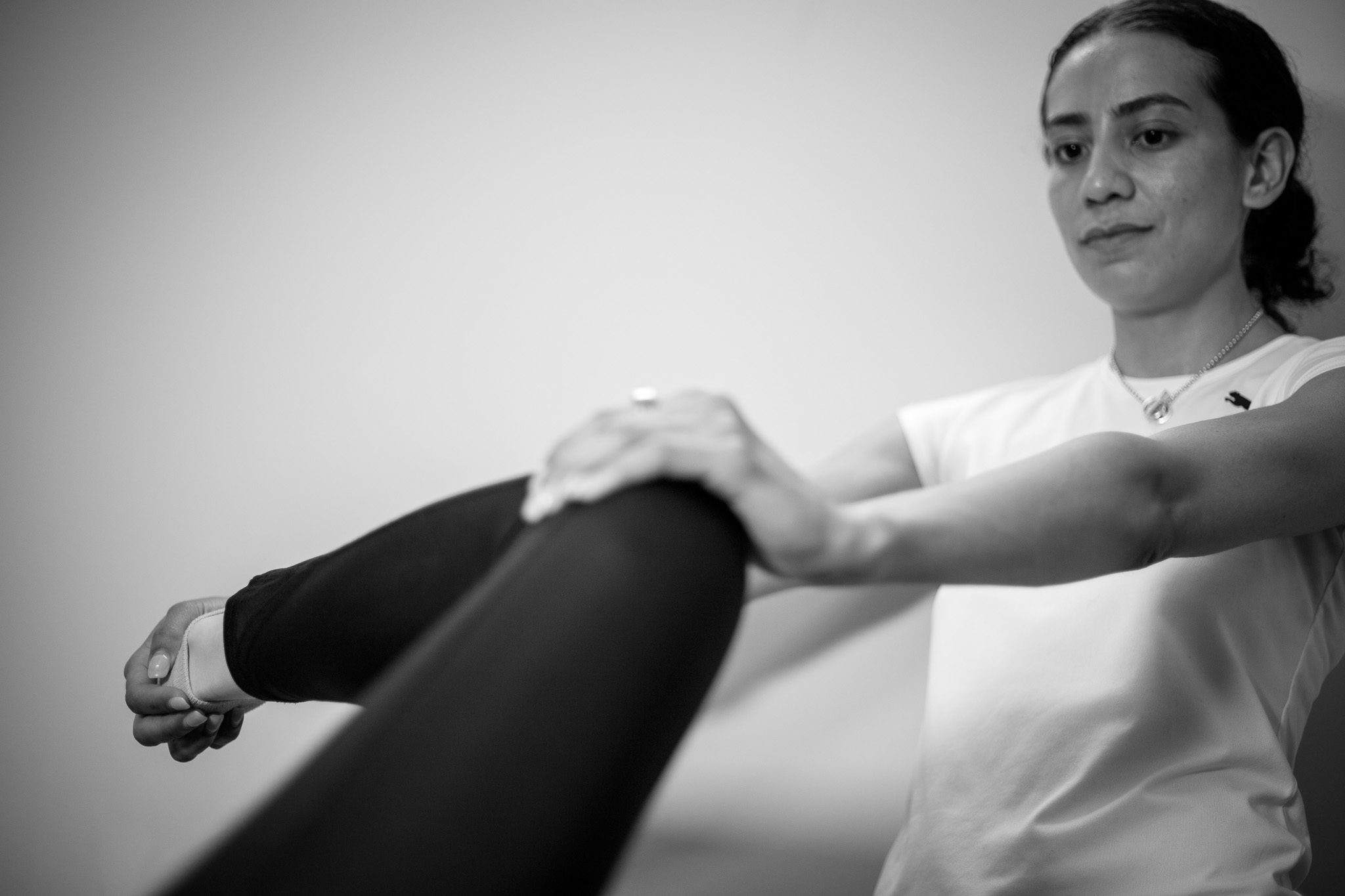
What Fascial Stretch Therapy Can (and Can't) Do for Stiff Hips and Backs
Most people who ask about Fascial Stretch Therapy have already tried stretching on their own. They hold a hamstring stretch after a run, do a few hip openers before bed, and still feel like they're moving inside a body two sizes too small. That's usually where fascial stretch therapy in Mississauga comes into the conversation at our clinic.
Fascial Stretch Therapy, or FST, is an assisted, table-based stretching method developed by Ann and Chris Frederick. You lie on a padded table, fully clothed, and I move your legs, hips, spine and shoulders through positions you can't easily reach on your own. Soft straps hold one leg steady while we work on the other, so you can actually let go instead of bracing.
It differs from ordinary stretching in a few ways. It starts with gentle traction, a light pull through the joint, before any stretch is applied. The movement then travels in several directions rather than one straight line, often in a slow, rhythmic wave, because the connective tissue around your muscles (the fascia) runs in long, connected lines from the foot through the hip and into the back. Everything is coordinated with your breathing and kept below the point of pain. If you're wincing, we've gone too far, and your nervous system will tighten up to protect you.
I also use a contract-relax technique: you gently push against my hands for a few seconds, relax, and we take up the new range. It's a well-studied way to improve flexibility in the short term, and it gives you some control over how the session feels.
FST tends to suit runners and cyclists on the Waterfront Trail with tight hips and hamstrings, golfers and pickleball players who have lost rotation, desk workers with a stiff lower back or neck, and people returning to activity once an injury has settled. It isn't a substitute for a diagnosis. If you have unexplained pain, numbness, a recent injury or a joint replacement, a physiotherapy assessment comes first, which is one of the advantages of having several disciplines under one roof.
I'll be straightforward about the evidence. Research on assisted and contract-relax stretching supports short-term gains in range of motion, and most people find the sessions relaxing. Research on FST as its own method is still limited, so I treat it as one tool within a broader plan rather than a fix on its own. Gains last longer when the session is paired with two or three home exercises and regular movement, which I'll go through with you before you leave.
A session usually runs 30 to 60 minutes. Wear clothing you can move in, such as athletic shorts or leggings and a t-shirt. Most people leave feeling looser and lighter; a few feel mildly tired or slightly sore the next day, much like after a good workout.
If you've been stretching on your own without much change, or you'd simply like to move more easily, FST is worth trying. We're at 1601 Lakeshore Road West in Clarkson, a short drive from Lorne Park, Port Credit and Oakville. You can book online or call us at 905-278-7101.
Julia De La Cruz RKin
Let’s Get You Moving
Whether you're starting your recovery or looking for long-term wellness support, we’re here to help—every step of the way. Our experienced team is committed to understanding your unique needs and guiding you with personalized care. From your first visit to your final milestone, we’re with you—focused on progress, comfort, and lasting results.