Hockey groin strain
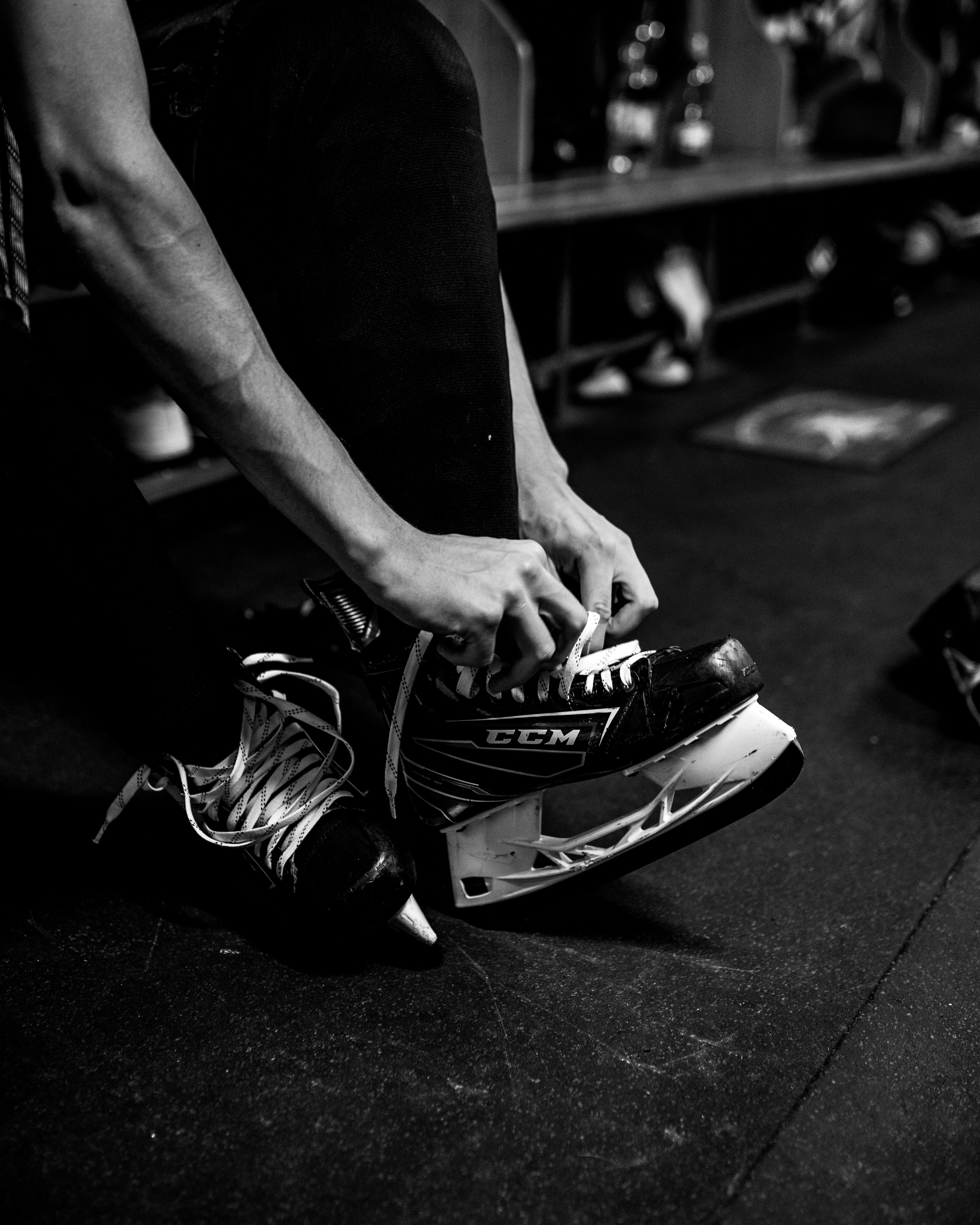
Hockey season is back and so are groin strains
The first three weeks back on the ice
Minor hockey and the adult rec leagues are starting up again, which means that over the next month I will start to see groin strains. It's predictable, begins to arrive at the same time every year, it affects the same muscles, and it happens for reasons that are well understood and largely preventable.
The muscle group involved is the adductors, running along the inside of the thigh from the pubic bone down to the femur. In skating they do a specific job: after you push off and your leg extends out to the side, the adductors pull it back underneath you to set up the next stride. They are doing this while lengthening under load, which is the most demanding way a muscle can work, and they are doing it hundreds of times a game.
The seasonal pattern comes from what happens in between. Most recreational players and a lot of young players do not skate through the summer. Even those who stay fit tend to do it in straight lines — running, cycling, the gym. None of those load the adductors the way skating does. So the muscle arrives in September with less capacity than it had in March, and is immediately asked to do full-season work. The first few weeks of the season are when the gap between demand and capacity is widest, and that gap is where strains happen.
Goaltenders are their own case. The butterfly position puts the adductors and hip at end range repeatedly, and goalies tend to accumulate hip problems rather than acute strains — a gradual loss of internal rotation, deep groin pain, stiffness after games. That pattern deserves attention rather than tolerance, particularly in adolescent goalies still growing.
What reduces the risk is adductor strength, specifically strength at long muscle lengths. Hip mobility work and single-leg glute strength support the same goal from a different angle.
The other prevention measure is a real warm-up. Not five minutes of standing around at the blue line, but ten minutes that includes skating at increasing intensity and some dynamic movement through the hips before the first hard shift. Most groin strains in the first weeks happen early in a session rather than late.
If you do strain something, the temptation is to rest until it stops hurting and then go back. That is how you get the recurrent version, which is far more common than it should be. Groin strains recur frequently, and the reason is usually that the player returned when pain resolved rather than when strength returned. Those are different milestones, often weeks apart. A proper return-to-play progression rebuilds strength and skating-specific loading before full contact, and it is worth the patience.
If you have a groin that has strained more than once, or pain in the groin that has been grumbling since last season, September is the right month to deal with it rather than the month to test it. Physiotherapy, registered massage therapy, osteopathy, chiropractic care and fascial stretch therapy can be great way to help manage. If you have questions about what might be best for you, connect with us to learn more.
Fady Rofail, PT, DPT
Physiotherapy & Beyond, South Mississauga
Let’s Get You Moving
Whether you're starting your recovery or looking for long-term wellness support, we’re here to help—every step of the way. Our experienced team is committed to understanding your unique needs and guiding you with personalized care. From your first visit to your final milestone, we’re with you—focused on progress, comfort, and lasting results.